
















Understanding the GARS-3: A Screening Tool for Autism Spectrum Disorder
Understanding the GARS-3: A Screening Tool for Autism Spectrum Disorder
Introduction
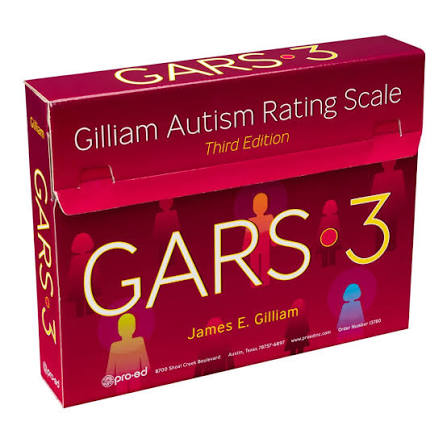
The Gilliam Autism Rating Scale–Third Edition (GARS-3) is a norm-referenced screening instrument designed to help identify individuals who may have an autism spectrum disorder (ASD). Its structure and content draw on definitions of autism established by the American Psychiatric Association and the Autism Society, and it is intended for use with individuals between roughly 3 and 22 years of age. Raters — typically parents, teachers, or other caregivers familiar with the individual — complete the scale based on observed behavior, and the results are combined with other clinical information (interviews, case histories, direct observation) to support a diagnostic picture.
Structure of the Scale
The GARS-3 consists of 58 items distributed across six subscales, each targeting a distinct cluster of behaviors associated with autism spectrum disorder:
- Restricted/Repetitive Behaviors – stereotyped movements, fixated interests, and rigid routines or rituals.
- Social Interaction – difficulties initiating or engaging in social exchanges, limited interest in others, and reduced expressed enjoyment during interaction.
- Social Communication – challenges understanding the intent behind communication, such as difficulty grasping humor, teasing, or the perspective of others.
- Emotional Responses – heightened or atypical emotional reactions, particularly around changes in routine or unexpected stimuli.
- Cognitive Style – unusual patterns of thought or speech, including narrow, intense interests and overly precise language.
- Maladaptive Speech – speech and language irregularities, such as echoing words/phrases, flat vocal tone, or idiosyncratic word use.
Each subscale contributes a raw score, which is later converted into standardized scores for interpretation.
Purposes and Applications
The GARS-3 serves several practical functions beyond simple identification:
- Diagnostic support — helping clinicians and evaluators identify individuals likely to have ASD, in conjunction with other diagnostic tools.
- Severity assessment — describing how pronounced a person’s symptoms are, which can inform treatment planning even when ASD is not the ultimate diagnosis.
- Progress monitoring — tracking behavioral change over time, useful for special education program evaluation and decisions about extended-year services.
- IEP goal-setting — pinpointing specific behavioral strengths and weaknesses that can shape individualized education plan targets.
- Research — providing a reliable, quantifiable measure of autistic behavior frequency and severity for use in studies.
Administering the Scale
Administration is straightforward: each rater receives a Summary/Response Form and rates every item on a 0–3 scale reflecting how typical the described behavior is for the individual, based on observation over a representative period (commonly framed as a 6-hour window of ordinary activity). The rating anchors are:
- 0 — Not at all like the individual (never observed)
- 1 — Not much like the individual (rarely observed)
- 2 — Somewhat like the individual (observed a few times)
- 3 — Very much like the individual (observed frequently)
Every item must receive a score; if a rater is unsure or has not had the opportunity to observe the person sufficiently, the examiner is expected to follow up rather than leave the item blank.
Special Considerations for Nonverbal Individuals
A meaningful proportion of individuals with ASD have limited or no spoken communication. Because the Maladaptive Speech subscale — and part of the Cognitive Style subscale — require some form of communication to rate accurately, these sections are omitted when an individual is completely nonverbal and has not communicated (verbally or through signs) for an extended period. In such cases, only the four remaining subscales are scored, and this is noted on the response form.
Scoring and the Summary/Response Form
The Summary/Response Form organizes the evaluation into several sections: identifying information, subscale performance, composite performance, an interpretation guide, the item ratings themselves, and supplementary reference material about the instrument.
Raw scores are calculated by summing item ratings within each subscale. These raw totals are then converted into two types of normative scores:
- Percentile ranks, which indicate the percentage of the normative sample scoring at or below a given point.
- Scaled scores, standardized to a mean of 10 and standard deviation of 3, allowing direct comparison across subscales.
The subscale scaled scores are then summed and converted into the Autism Index, a composite standard score with a mean of 100 and standard deviation of 15. Higher Autism Index scores reflect greater severity of autism-related behavior.
Two versions of the Autism Index exist:
- Autism Index (6-subscale) — used when all six subscales, including speech-related ones, can be completed.
- Autism Index (4-subscale) — used for nonverbal or severely communication-impaired individuals, based on the four subscales that do not require verbal ability.
Both versions are considered reliable and valid for diagnostic purposes.
Interpreting the Autism Index
The GARS-3 provides interpretive guidelines that link Autism Index ranges to a probability of ASD and a corresponding severity level:
| Autism Index | Probability of ASD | DSM-5 Severity Level | Description |
|---|---|---|---|
| ≤ 54 | Unlikely | — | Not indicative of ASD |
| 55–70 | Probable | Level 1 | Minimal support required |
| 71–100 | Very likely | Level 2 | Substantial support required |
| ≥ 101 | Very likely | Level 3 | Very substantial support required |
A few interpretive notes accompany this framework:
- Scores below 55 are rare among individuals with confirmed ASD in the normative sample, and such low scores may reflect either misdiagnosis or significant behavioral improvement over time.
- Scores in the 55–70 range represent the higher-functioning end of the spectrum; individuals here may resemble typically developing peers but show social or communicative differences. The manual cautions that other conditions (e.g., intellectual disability, ADHD, learning disabilities, sensory impairments) can sometimes produce similar behavioral profiles, so corroborating evidence is recommended when scores fall near this threshold.
- Scores from 71–100 indicate a high likelihood of ASD, generally corresponding to what was historically termed “high-functioning autism” or Asperger’s disorder — individuals who are verbal and academically capable but face challenges in social and emotional domains.
- Scores of 101 or higher indicate a strong likelihood of ASD with more pronounced symptoms, typically requiring intensive behavioral and academic support.
Conclusion
The GARS-3 offers a structured, standardized way to translate observed behavior into quantifiable, interpretable scores. By combining subscale-level detail with an overall composite index, it supports not just diagnosis but also treatment planning, progress tracking, and educational goal-setting — while its guidelines consistently emphasize that results should be interpreted alongside other clinical and observational evidence rather than in isolation.