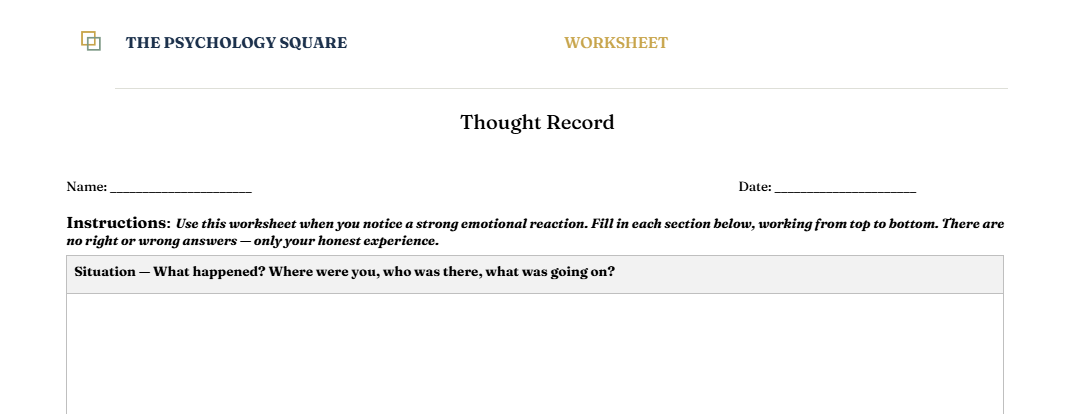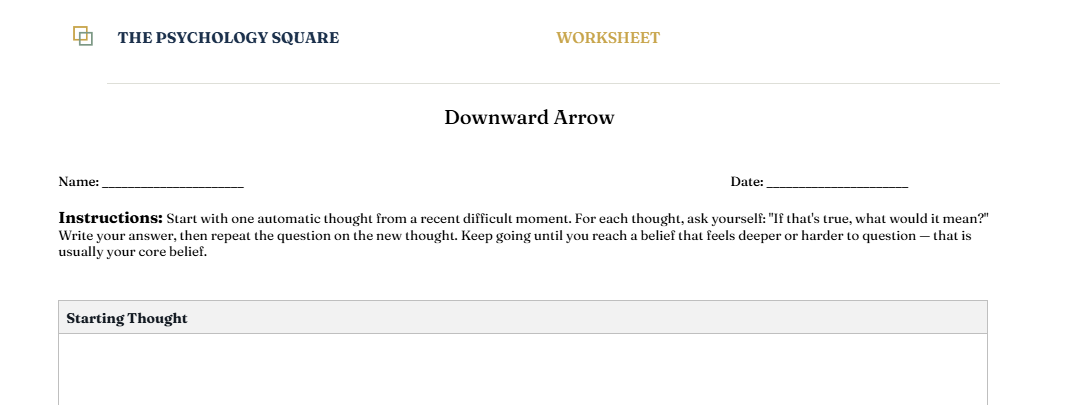


















Cognitive Distortions Checklist - Worksheet
Identify your cognitive distortions with this free worksheet and reference list — all 10 common thinking traps explained with real-life examples.
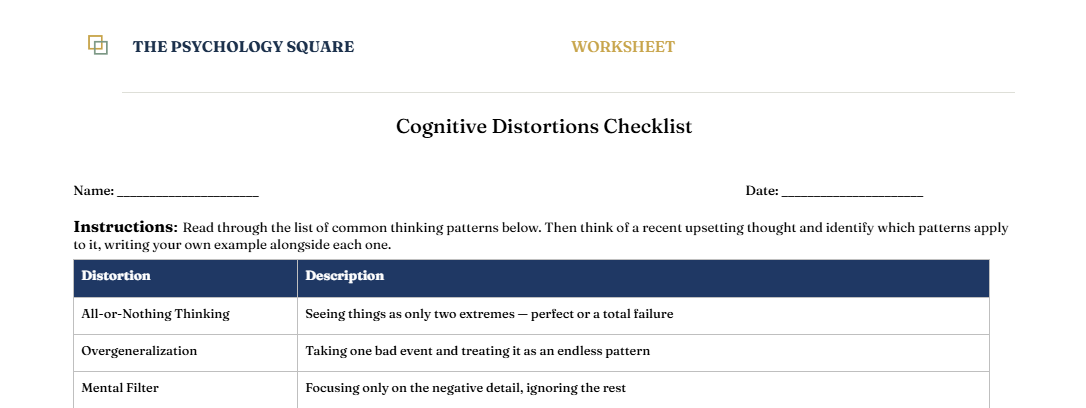
Cognitive distortions are the automatic thinking patterns that quietly distort how we interpret situations — often making things feel worse than they are. This worksheet gives you a complete reference list of the 10 most common cognitive distortions, each with a plain-language description, plus a guided reflection section to identify which ones show up in your own thinking.
Distortions covered include all-or-nothing thinking, overgeneralization, mental filtering, discounting the positive, jumping to conclusions, magnification/minimization, emotional reasoning, should statements, labeling, and personalization — the same categories used across CBT literature and clinical practice.
Who this worksheet is for
- Anyone wanting to recognize unhelpful thinking patterns in daily life
- CBT and therapy clients building distortion-awareness skills
- Students and practitioners studying cognitive psychology
How to use it
Read through the reference list first to familiarize yourself with each distortion. Then, using a recent upsetting thought, work through the reflection table to identify which patterns apply and write your own example. Repeating this exercise over time reveals your most frequent distortion — often the fastest route to meaningful cognitive change.