














Isolation on Ice: What Antarctica Teaches Us About Surviving on Mars
Introduction
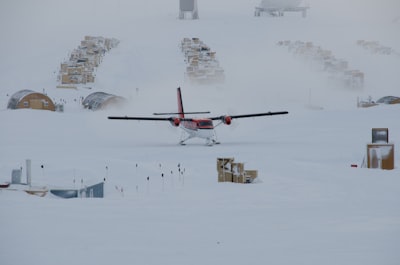
Imagine spending ten months in a sealed research outpost where the only window looks out on endless white, the sun never rises above the horizon for months, and the nearest human contact is the same eleven colleagues you share meals, work, and leisure with every day. This is not a science‑fiction scenario but the lived reality of a dozen volunteers at Concordia Station in Antarctica. Their experience offers a rare window into the psychological effects of isolation—a topic that suddenly feels less abstract when we consider how similar conditions will confront the first crews bound for Mars. While most of us may never trek across the polar plateau, the emotional and cognitive shifts documented in Antarctica echo the mental effects of isolation many feel during prolonged remote work, solitary travel, or even self‑isolation during a pandemic. Understanding what happened on the ice can help us all navigate loneliness, social fatigue, and the subtle reshaping of thought that accompany any extended separation from broader society.
Psychological Effects of Isolation: The Science Behind the Antarctic Analogue
The Concordia experiment was designed as a high‑fidelity analogue for deep‑space missions because the station is inaccessible for nine months each year, subjects its crew to extreme cold, hypoxia, and a 24‑hour darkness/light cycle that mimics Martian day‑night rhythms. Twelve participants—six men and six women—were monitored continuously for ten months, with data collected on mood, interpersonal dynamics, cognitive performance, and physiological stress markers.
Methodologically, the study combined self‑report questionnaires (e.g., the Profile of Mood States), daily digital diaries, and wearable sensors that tracked heart‑rate variability as an index of autonomic stress. Researchers also conducted weekly structured interviews to capture evolving perceptions of group cohesion and individual well‑being. The design mirrored protocols used in previous isolation research, allowing direct comparison with other extreme environments such as submarines, polar stations, and even prison segregation units, where the psychological effects of isolation in prison have been linked to heightened anxiety and aggression (Cacioppo, 2011).
Key findings emerged early in the mission. Within the first two months, participants reported a noticeable dip in positive affect and a rise in perceived loneliness—a classic illustration of the psychological effects of loneliness that can develop even when surrounded by others (Cacioppo, 2011). However, unlike typical social settings where increased contact mitigates loneliness, the confined crew experienced a paradoxical increase in tension as the months progressed. By the fifth month, reports of mistrust and irritability peaked, despite the fact that the same small group was spending the majority of each day together. This counterintuitive outcome aligns with the concept of “social fatigue,” where continuous proximity without sufficient personal space erodes the quality of interpersonal exchanges (Gaier, 2025).
Quantitatively, the team’s mood scores showed a U‑shaped trajectory: an initial decline, a brief stabilization, and a second dip during the later stages of isolation. Cognitive testing revealed modest but consistent slowing on reaction‑time tasks, suggesting that the psychological effects of prolonged isolation can subtly impair processing speed—a finding that mirrors laboratory studies of sensory deprivation (Barbour, 2024). Moreover, physiological data indicated elevated cortisol levels during periods of heightened group conflict, underscoring the link between social stressors and the body’s stress response.
One of the most striking observations was the emergence of “self‑isolation” behaviors within the group. As tension rose, several crew members began to withdraw physically—spending longer periods in personal compartments, using headphones to block ambient conversation, and limiting non‑essential social interaction. This self‑imposed separation amplified feelings of alienation, illustrating how the psychological effects of self isolation can be both a symptom and a catalyst of broader group dysfunction (Pagnini, 2024). Participants also described an “emotional flattening,” where affective reactions to both positive and negative events became muted—a phenomenon that researchers have termed the “emotional effects of isolation” in other confined settings (Cacioppo, 2011).
Importantly, the study did not find a simple linear relationship between the amount of time spent together and improved cohesion. Instead, the data suggest an optimal “dose” of social contact, beyond which the benefits plateau and may reverse. This nuance is critical for mission planners who might assume that constant crew interaction is inherently protective. The Concordia findings argue for intentional design of personal space, scheduled “alone time,” and structured conflict‑resolution protocols to mitigate the adverse psychological effects of extreme isolation (Barbour, 2024).
While the Antarctic environment is harsh, it lacks certain stressors unique to space—microgravity, radiation, and communication delays. Nevertheless, the core psychological dynamics observed—loneliness, mistrust, cognitive slowdown, and self‑isolation—provide a robust baseline for anticipating the psychological effects of complete isolation that astronauts will face on a multi‑year journey to Mars (Gaier, 2025). The study’s interdisciplinary approach, integrating psychosocial metrics with physiological monitoring, exemplifies the biopsychosocial (BPS) framework advocated for long‑duration spaceflight health planning (Barbour, 2024).
Why These Findings Matter Beyond the Ice
For most readers, the relevance of an Antarctic research station may seem distant, yet the underlying mechanisms of isolation are universal. Whether you’re a remote worker, a caregiver confined to a hospital ward, or a student studying alone during a lockdown, the same patterns emerge: an initial surge of novelty, followed by a gradual erosion of mood, and eventually, a craving for meaningful personal space.
In the corporate world, the rise of distributed teams has amplified the mental effects of isolation. Employees report “Zoom fatigue” and a sense of detachment that mirrors the crew’s experience of social fatigue at Concordia. Understanding that constant interaction without adequate downtime can breed mistrust helps managers design schedules that balance collaborative meetings with solitary work periods.
Parents juggling homeschooling and remote work also encounter the emotional effects of isolation. Children, like the crew members, may oscillate between seeking attention and retreating into self‑isolation, leading to family tension. Recognizing the natural ebb and flow of social needs can foster more compassionate parenting strategies.
From a public‑health perspective, the pandemic highlighted how self‑imposed quarantine can trigger the psychological effects of self isolation, including heightened anxiety and depressive rumination. The Concordia data remind us that while physical safety is paramount, mental health safeguards—such as structured social rituals and personal time—are equally essential.
Finally, the findings have direct implications for the nascent field of space colonization. As agencies like NASA and private firms plan missions that will keep crews confined for up to three years, the lessons from Antarctica suggest that mission architecture must embed psychological resilience as a core engineering requirement, not an afterthought (Pagnini, 2024). Without such foresight, the psychological effects of prolonged isolation could jeopardize mission success, scientific output, and crew safety.
Practical Takeaway: Coping Strategies for Anyone Facing Extended Isolation
Drawing from the Antarctic study and broader isolation research, here are four evidence‑based practices you can adopt right now:
- Schedule intentional “alone time.”strong> Just as the Concordia crew benefited from personal compartments, carve out daily periods where you disengage from digital communication and social obligations. Use this time for reflective activities—journaling, reading, or mindful walking—to reset emotional equilibrium (Pagnini, 2024).
- Create micro‑rituals for group interaction. Rather than constant, unstructured contact, design brief, purposeful gatherings (e.g., a 15‑minute “check‑in” at the start of the day). This limits social fatigue while preserving cohesion, echoing the optimal “dose” of interaction identified in the Antarctic data (Gaier, 2025).
- Incorporate regular physical activity. Exercise boosts neurochemical pathways—BDNF and serotonin—that counteract depressive mood states linked to isolation (Ma, 2025). Even modest aerobic sessions three times a week can buffer the cognitive slowdown observed in prolonged confinement.
- Leverage structured conflict‑resolution tools. When tension arises, apply clear protocols—such as “talk‑listen‑solve” frameworks—to address mistrust before it escalates. Training in these skills before isolation begins has been shown to reduce interpersonal strain on long missions (Barbour, 2024).
Implementing these strategies can mitigate the psychological effects of extreme isolation in everyday contexts, from remote work to long‑distance travel, and prepare future explorers for the mental rigors of interplanetary journeys.
Closing Thoughts
The Antarctic winter may feel like a world apart, but its lessons are strikingly relevant to life on Earth—and soon, perhaps, to life on Mars. The crew’s journey through loneliness, social fatigue, and self‑imposed withdrawal reminds us that human beings thrive not merely on contact, but on balanced, meaningful interaction that respects the need for solitude. By recognizing the nuanced psychological effects of isolation—whether on ice, in a prison cell, or aboard a spacecraft—we can design environments, routines, and support systems that keep us mentally resilient, no matter how far from home we travel.
References
- Barbour. (2024). Biopsychosocial Health Considerations for Astronauts in Long-Duration Spaceflight: A Narrative Review. Wilderness & environmental medicine (Print). https://doi.org/10.1177/10806032241289106
- Ma. (2025). The long-term mental health benefits of exercise training for physical education students: a comprehensive review of neurobiological, psychological, and social effects. Frontiers in Psychiatry. https://doi.org/10.3389/fpsyt.2025.1678367
- Pagnini. (2024). Supporting the Mind in Space: Psychological Tools for Long-Duration Missions. Interactive Journal of Medical Research. https://doi.org/10.2196/66626
- Weissman. (2024). Quasi-torpor for long-duration space missions. Frontiers in Space Technologies. https://doi.org/10.3389/frspt.2024.1457487
- Gaier. (2025). Human Adaptation on ‘White Mars’: A Narrative Review on the Biopsychosocial Effects of the Isolated, Confined, and Extreme Environment at Concordia Station, Antarctica. Work and Health. https://doi.org/10.53941/wah.2025.100014
- Baumeister. (1998). Freudian Defense Mechanisms and Empirical Findings in Modern Social Psychology: Reaction Formation, Projection, Displacement, Undoing, Isolation, Sublimation, and Denial. Journal of Personality. https://doi.org/10.1111/1467-6494.00043
- Freud. (1961). The standard edition of the complete works of Sigmund Freud (Vol. 20). Hogarth Press.
- Bonanno. (1991). The repressor personality and avoidant information processing: A dichotic listening study.. Journal of Research in Personality. https://doi.org/10.1016/0092-6566(91)90029-p
- Edwards. (1993). Depression and the impression-forming continuum: Piecemeal processing despite the availability of category information.. Journal of Personality and Social Psychology. https://doi.org/10.1037/0022-3514.64.4.636
- Cacioppo. (2011). Social isolation. Ann. N.Y. Acad. Sci.. https://doi.org/10.1111/j.1749-6632.2011.06028.x
- Puumala. (2023). Moving to Mars: The Feasibility and Desirability of Mars Settlements. Space Policy. https://doi.org/10.1016/j.spacepol.2023.101590
- Eijk. (2020). Sorry, Elon: Mars is not a legal vacuum – and it's not yours, either. Völkerrechtsblog. https://doi.org/10.17176/20210107-183703-0
- Scharmen. (2017). Highest and Best Use: Subjectivity and Climates Off and After Earth. Journal of Architectural Education. https://doi.org/10.1080/10464883.2017.1340775
- Puumala. (2023). Moving to Mars: The Feasibility and Desirability of Mars Settlements. Space Policy. https://doi.org/10.1016/j.spacepol.2023.101590
- Eijk. (2020). Sorry, Elon: Mars is not a legal vacuum – and it's not yours, either. Völkerrechtsblog. https://doi.org/10.17176/20210107-183703-0
Paper data via Semantic Scholar.