

















Targeting a Tiny Amygdala Circuit Reverses Anxiety in Mice
Why the amygdala matters for anxiety
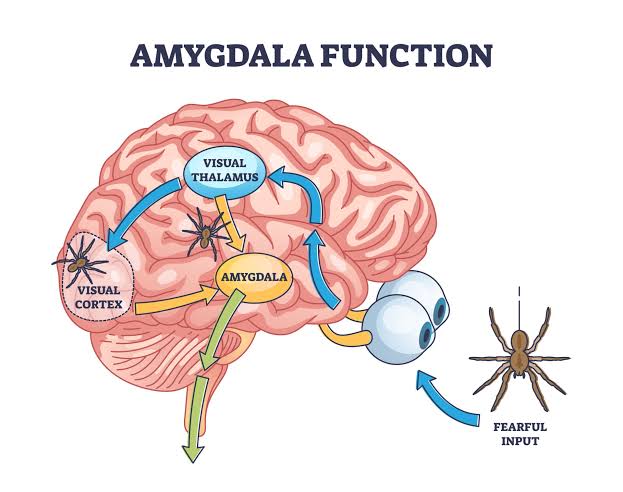
When a person feels a knot in the chest or a racing heart, the brain region that most often lights up on functional scans is the amygdala. For decades neuroscientists have asked whether the amygdala merely reflects fear or actually drives the feeling. The answer is not binary; the structure contains dozens of interlocking pathways that can amplify or dampen threat signals. In animal work, lesions that remove the whole amygdala blunt defensive responses, suggesting that it can cause anxiety‑like behavior (does the amygdala cause anxiety?). Yet the same region also houses circuits that keep anxiety at a tolerable level, raising the question of whether the amygdala controls anxiety through a balance of excitation and inhibition (does the amygdala control anxiety?). Recent work on the amygdala circuit anxiety hypothesis has moved beyond the idea of a monolithic “fear center” and toward a view that specific microcircuits within the basolateral amygdala (BLA) may be the decisive switches.
The newly identified microcircuit
Juan Lerma’s team focused on a narrow population of glutamatergic projection neurons that receive dense input from the ventral hippocampus and send axons to the medial prefrontal cortex. Using retrograde tracing, they mapped a loop that runs BLA → prefrontal cortex → ventral hippocampus → BLA. Within the BLA, these projection cells are interspersed with a distinct class of GABA‑producing interneurons that express cholecystokinin (CCK). Prior work showed that activating CCK‑interneurons can reduce stress‑induced anxiety in mice (Fang et al., 2024), hinting that the balance between these excitatory and inhibitory cells might be a lever for emotional tone.
The researchers confirmed that the excitatory projection neurons fire at a higher rate in mice that display heightened anxiety on the elevated plus maze. Simultaneously, the CCK‑interneurons show reduced calcium transients, indicating weaker inhibition. This pattern mirrors findings that social stress can strengthen ventral tegmental area inputs to the BLA, pushing the circuit toward hyperexcitability (Contesse et al., 2025). In other words, the newly described pathway appears to be a “circuit for anxiety” that can be tipped either way.
Optogenetic rescue of the circuit
To test causality, the team employed optogenetics, a method that lets scientists turn specific neurons on or off with millisecond precision using light‑sensitive proteins. They injected a viral vector encoding halorhodopsin—a light‑driven chloride pump—into the BLA of adult mice. The virus was designed to target only the excitatory projection neurons identified earlier, leaving surrounding cells untouched. After allowing three weeks for expression, fiber‑optic cannulas were implanted just above the BLA.
During behavioral testing, the researchers shone yellow light (590 nm) to silence the overactive projection cells for a few minutes before each trial. In a separate cohort, they used channelrhodopsin to boost activity of the CCK‑interneurons, providing a complementary route to restore inhibition. Both manipulations produced a rapid normalization of the circuit’s firing pattern, as measured by in‑vivo electrophysiology. The ability to flip the circuit “off” and “on” with light mirrors earlier demonstrations that hunger can promote fear extinction by engaging an amygdala microcircuit (Verma et al., 2015), underscoring the flexibility of these networks.
Behavioral outcomes in mice
Silencing the excitatory projection neurons eliminated the time‑spent‑in‑closed‑arms phenotype that defines anxiety on the elevated plus maze. Mice that previously avoided the open arms spent nearly as much time there as control animals that never displayed anxiety. In the open‑field test, the same optogenetic protocol increased center‑zone exploration, another hallmark of reduced anxiety. Social interaction assays also showed a reversal: mice that had withdrawn from a novel conspecific began to approach and sniff the stranger after the circuit was corrected.
Importantly, the effect was not a generic suppression of movement. Locomotor speed measured in a separate locomotor arena remained unchanged, indicating that the optogenetic intervention specifically targeted anxiety‑related behavior rather than causing sedation. The authors also tested whether the rescue persisted after the light was turned off. In most animals, the anxiety‑like phenotype re‑emerged within 24 hours, suggesting that the manipulation corrected a state rather than rewired the circuit permanently. This reversibility aligns with observations that the insular cortex–amygdala pathway can encode anxiety levels in a dynamic fashion (Nicolas et al., 2023).
How this fits with existing knowledge
The new findings dovetail with a growing literature that treats the amygdala as a collection of parallel streams rather than a single alarm system. For instance, a recent study linked the basolateral amygdala–anterior cingulate cortex circuit to anxiety in a model of post‑herpetic neuralgia (Jiang et al., 2025). That work highlighted how pain and anxiety can co‑activate overlapping pathways, reinforcing the idea that the amygdala’s output is context‑dependent.
Other investigations have shown that chronic social defeat stress can strengthen glutamatergic inputs from the ventral tegmental area onto BLA principal cells, producing a GluA1‑dependent form of synaptic potentiation that raises anxiety (Contesse et al., 2025). The Lerma team’s microcircuit appears to be a downstream node where such stress‑induced potentiation could manifest. Likewise, the role of CCK‑interneurons in providing a brake on BLA excitability (Fang et al., 2024) offers a mechanistic explanation for why boosting these cells rescues anxiety‑like behavior.
Collectively, these studies suggest that “does the amygdala cause anxiety?” is too blunt a question. The answer depends on which subpopulation of neurons is engaged, what upstream inputs are active, and how inhibitory interneurons are recruited. The new microcircuit provides a concrete example of how a small cluster of cells can tip the balance toward pathological anxiety, and how restoring that balance can reverse the phenotype.
Translational prospects and hurdles
From a therapeutic perspective, the demonstration that a single circuit can be toggled to erase anxiety in mice raises hopes for human interventions. Non‑invasive neuromodulation techniques such as transcranial magnetic stimulation (TMS) and focused ultrasound are already being explored for mood disorders, but they lack the spatial precision to target a sub‑millimeter cluster of BLA neurons. Deep brain stimulation (DBS) can reach the amygdala, yet the surgical risks and the need for chronic implants make it a last‑resort option.
One possible bridge is the development of chemogenetic approaches that use systemically administered drugs to activate engineered receptors expressed in specific cell types. If a viral vector could be delivered safely to human BLA projection neurons, a pill could theoretically mimic the optogenetic inhibition achieved in mice. However, translating viral delivery to the human brain raises safety, immune, and ethical concerns that remain unresolved.
Another avenue is pharmacology that indirectly modulates the identified circuit. The CCK‑interneurons that dampen excitatory output are sensitive to endocannabinoid signaling, and drugs that enhance this pathway have shown anxiolytic effects in preclinical models. Yet the specificity of such drugs is far lower than that of optogenetics, and off‑target effects could offset any benefit.
Beyond technical challenges, the mouse model itself has limits. Anxiety in rodents is measured by avoidance of open spaces, which captures only a slice of the human experience that includes worry, rumination, and anticipatory dread. Moreover, the circuit was identified in a genetically homogeneous laboratory strain; human populations exhibit far greater genetic and environmental diversity, which may shape circuit architecture in unpredictable ways.
Nevertheless, the study adds weight to the view that anxiety disorders could be treated by restoring circuit balance rather than globally suppressing amygdala activity. It also provides a template for future work: map the human analog of the BLA‑prefrontal‑hippocampal loop, identify biomarkers of its hyperactivity (perhaps through high‑resolution fMRI or magnetoencephalography), and test whether targeted modulation can alleviate symptoms in a controlled clinical trial.
In the meantime, the research reminds clinicians and patients that anxiety is not a monolithic brain malfunction. It can arise from a mis‑tuned amygdala circuit anxiety pathway that, at least in mice, can be nudged back into equilibrium. Whether similar nudges will prove safe and effective in people remains an open question, but the proof‑of‑concept that a tiny circuit can switch anxiety on and off offers a new lens through which to view both the disorder and its possible remedies.
References
- Verma. (2015). Hunger promotes fear extinction by activation of an amygdala microcircuit. Neuropsychopharmacology. https://doi.org/10.1038/npp.2015.163
- Nicolas. (2023). Linking emotional valence and anxiety in a mouse insula-amygdala circuit. Nature Communications. https://doi.org/10.1038/s41467-023-40517-1
- Jiang. (2025). The basolateral amygdala-anterior cingulate cortex circuit contributes to postherpetic neuralgia-anxiety comorbidity. Theranostics. https://doi.org/10.7150/thno.111130
- Contesse. (2025). Social stress increases anxiety by GluA1-dependent synaptic strengthening of ventral tegmental area inputs to the basolateral amygdala.. Biological Psychiatry. https://doi.org/10.1016/j.biopsych.2025.04.007
- Fang. (2024). Cholecystokinin-expressing interneurons mediated inhibitory transmission and plasticity in basolateral amygdala modulate stress-induced anxiety-like behaviors in mice. Neurobiology of Stress. https://doi.org/10.1016/j.ynstr.2024.100680
Paper data via Semantic Scholar.